
The human eye is a marvel of biological engineering. Roughly the size of a ping-pong ball, yet capable of absorbing an astonishing amount of information in fractions of a second, your eyes are the reason you can read this article, avoid lampposts while texting, and stare suspiciously at someone who’s just butchered the Queen’s English on a shop sign.
Despite their importance, most of us take our eyes for granted until something goes wrong. So, let’s pull back the curtain (or rather, the eyelid) on ten fascinating facts about the human eye that you probably didn’t know. These nuggets of truth range from the scientific and medical to the downright weird. And yes, I’ll sprinkle in a bit of sarcasm to keep it bearable.
1. Your Eyes Contain Over 100 Million Light-Sensitive Cells
Inside the retina — the thin layer at the back of your eye — sit photoreceptors that convert light into electrical signals. These are split into rods and cones:
- Rods: roughly 120 million of them, excellent at detecting low light and movement. Think night vision goggles without the green tint.
- Cones: around 6 million, responsible for colour vision and detail.
To put that into perspective, even the most advanced digital camera sensors don’t come close to the density and complexity of the retina. And unlike your phone, your eyes don’t crash after an iOS update.
2. You Blink Around 15–20 Times a Minute
Blinking isn’t just an annoying reflex that gets in the way of staring contests; it’s vital for spreading tears across the eye’s surface, keeping it moist and clean. On average, adults blink about 15–20 times per minute. That’s roughly 1,200 times an hour or over 28,000 blinks a day.
What’s more, research shows people blink less when staring at screens. So if your eyes feel like sandpaper after a Netflix binge or eight hours of spreadsheets, that’s why. The NHS recommends the “20-20-20 rule”: every 20 minutes, look at something 20 feet away for 20 seconds. Consider it a mini eye workout, minus the Lycra.
3. Eye Colour Is All About Melanin
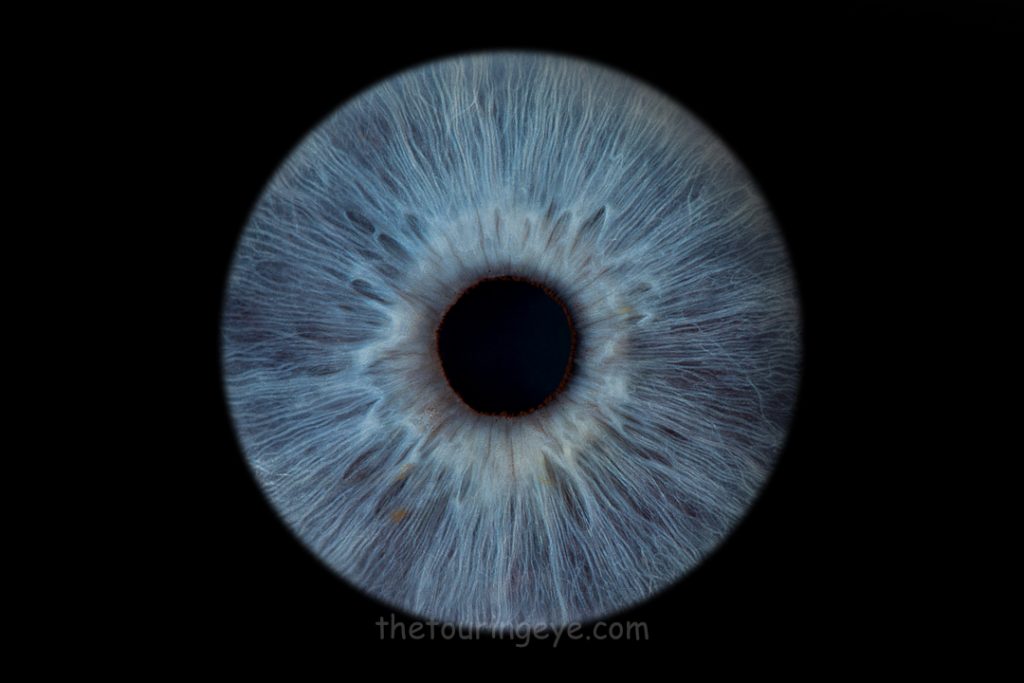
Your iris colour — blue, green, brown, or the occasional hazel — depends on the amount and distribution of melanin.
- Brown eyes (the majority worldwide, particularly common in Asia and Africa) have the most melanin.
- Blue eyes have almost none; their colour is caused by light scattering, similar to the sky.
- Green eyes are the 2nd rarest (after grey), accounting for less than 2% of the global population.
In the UK, around 48% of people have blue eyes, compared to less than 20% in most of Southern Europe. A curious reminder that eye colour isn’t just a personal trait; it’s a geographical one too.


4. Your Eyes Are Nearly Fully Formed at Birth
Unlike many body parts that grow significantly after birth, the eye is relatively developed from the start. By the time you’re born, your eyes are about two-thirds their adult size. That’s why babies appear so wide-eyed — their eyes are disproportionately large compared to their heads.
This also explains why people describe newborns as “staring into your soul.” They’re not mystical; they just have massive eyes compared to the rest of their tiny bodies.
5. Your Eyes Heal Remarkably Quickly
If you scratch your cornea (the transparent front layer of your eye), the cells regenerate rapidly. In fact, minor corneal injuries can heal in as little as 24–48 hours.
Compare that to skin wounds that can linger for days or weeks. The catch, of course, is that while the cornea heals quickly, it’s also extremely sensitive. Anyone who’s ever had grit under their eyelid knows it feels like you’ve been attacked with a medieval torture device.
6. You Actually See the World Upside Down
Here’s a fun one: the lens of your eye flips everything upside down when projecting it onto the retina. It’s your brain that then re-inverts the image so you’re not constantly stumbling around like a bat.
This is a perfect reminder that your eyes and brain are inseparable. Without the visual cortex doing its job, you’d essentially just have two useless fleshy cameras feeding you upside-down nonsense.
7. Your Eyes Can Detect About 10 Million Colours
Humans are trichromats, meaning we have three types of cones sensitive to red, green, and blue wavelengths. With this system, the average human can distinguish roughly 10 million colours.
To put that into context, printers usually handle around 16.7 million colours. Sounds impressive, but in reality, no human can perceive all of them. So when the salesperson at the electronics shop insists that your new TV has “billions of colours,” take it with a pinch of salt.
Interestingly, a small number of people — mostly women — are believed to be tetrachromats, possessing a fourth type of cone. They may perceive up to 100 million colours. Which is probably why some people argue passionately about whether that dress was blue and black or white and gold.


8. Your Eyes Are Unique as Fingerprints
Just like fingerprints, no two irises are the same. This uniqueness is why iris recognition is increasingly used in security systems, including at airports and in high-security facilities.
The patterns in your iris are formed in the womb and remain unchanged throughout your life. Even identical twins have distinct iris patterns. If fingerprints are a good security measure, irises are essentially Fort Knox.
9. Your Eyes Reveal a Lot About Your Health
The eyes don’t just let you see; they can also act as windows into your overall health. Certain conditions can first show up in the eye, such as:
- Diabetes: can cause diabetic retinopathy, visible during an eye exam.
- High blood pressure: may cause changes in retinal blood vessels.
- Liver disease: Kayser–Fleischer rings, copper deposits seen in Wilson’s disease, appear in the iris.
- High cholesterol: Arcus senilis, a grey or white ring around the iris, often signals elevated cholesterol.
This is why regular eye tests are not just about reading tiny letters on a chart. They’re essential check-ups for your overall health, and in the UK, the NHS recommends most adults get their eyes tested every two years.
10. Your Eyes Work With Your Brain Faster Than Any Camera
When you look at an object, it takes about 13 milliseconds for your eyes to transmit the information to your brain. That’s faster than a blink.
The processing speed of the human visual system is still leagues ahead of even the best artificial intelligence recognition software. Despite all our tech, your eyes and brain combo remain the original high-speed data processor — and one that doesn’t demand monthly subscription fees.
Final Thoughts
The human eye is an extraordinary organ: delicate yet durable, complex yet intuitive. From healing faster than skin to acting as an early warning system for systemic disease, our eyes are far more than just passive observers of the world.
So next time you rub your eyes after a long day staring at screens or complain about your glasses steaming up in winter, take a moment to appreciate the astonishing biology behind those two spheres in your skull.
And if you’ve made it this far, here’s a bonus fact: eyes never actually grow, which means if you’re still waiting to grow into your “adult eyes” — sorry, that ship sailed in primary school.
Leave a Reply
You must be logged in to post a comment.