

Quick Answer: What Makes Blue Eyes Blue?
Blue eyes are not blue because the iris contains blue pigment. In fact, blue eyes usually have less melanin in the front layer of the iris than brown eyes. Their colour comes mainly from the way light scatters inside the iris, a similar optical effect to why the sky appears blue.
That does somewhat ruin the romance, admittedly. But it also makes blue eyes more interesting, not less.
Blue eyes are shaped by genetics, ancestry, melanin levels, light scattering and, sometimes, even the lighting conditions around you. They can appear pale blue, grey-blue, deep blue, icy blue or even slightly greenish depending on the eye, the environment and how the image is captured.
Here are ten properly fact-checked facts about blue eyes.
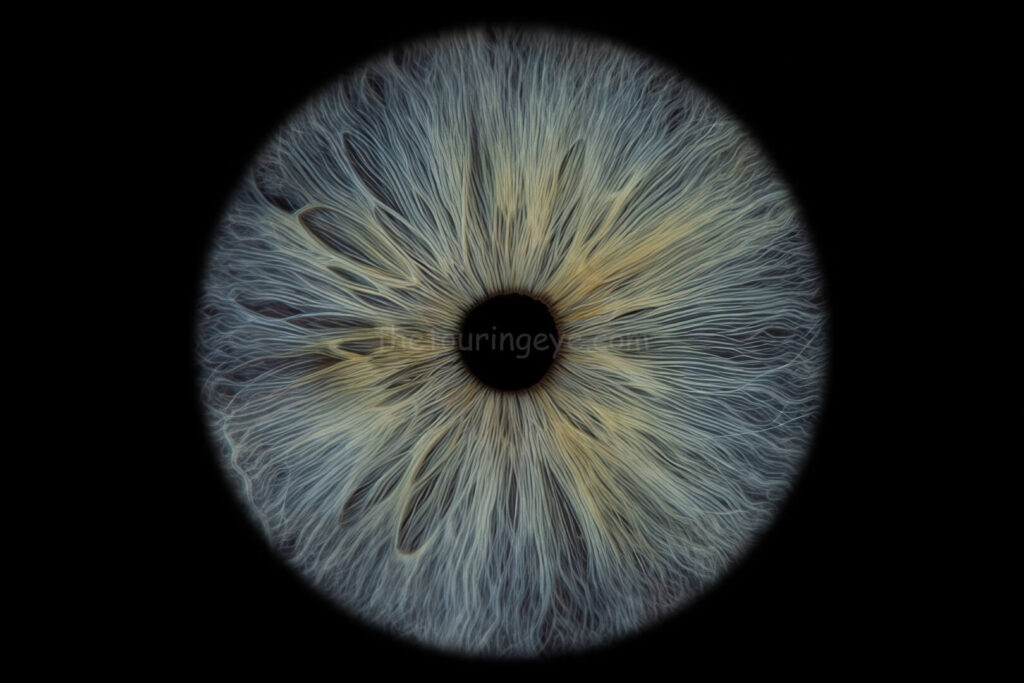
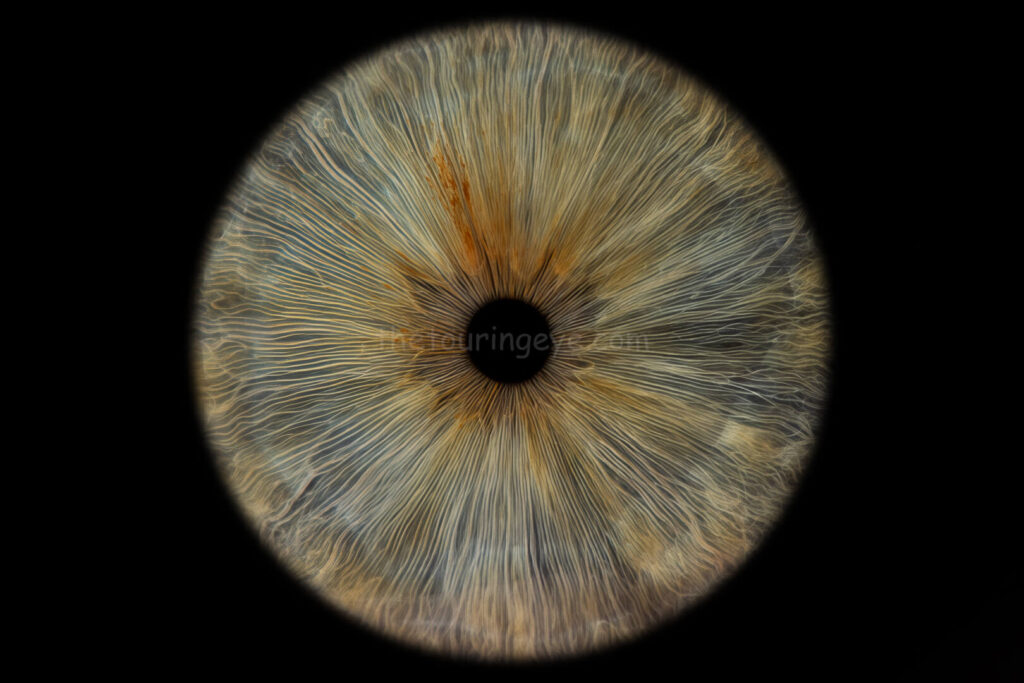
1. Blue Eyes Do Not Contain Blue Pigment
One of the biggest misconceptions about blue eyes is that they are blue because they contain blue pigment. They do not.
Eye colour is mainly influenced by melanin, the same broad family of pigment involved in skin and hair colour. Brown eyes contain more melanin in the iris. Blue eyes contain much less melanin in the front part of the iris.
So where does the blue come from?
It comes from light scattering.
When light enters a blue eye, longer wavelengths are absorbed while shorter wavelengths are scattered back. This scattering effect gives the eye its blue appearance. It is often compared with the way the sky looks blue, although the eye is obviously a rather more personal bit of weather.
This is also why blue eyes can look slightly different depending on the light. A blue eye photographed with flash, photographed outdoors, or seen in warm indoor lighting may not appear exactly the same each time.
Key takeaway: Blue eyes are blue because of structure and light scattering, not because there is blue pigment in the iris.
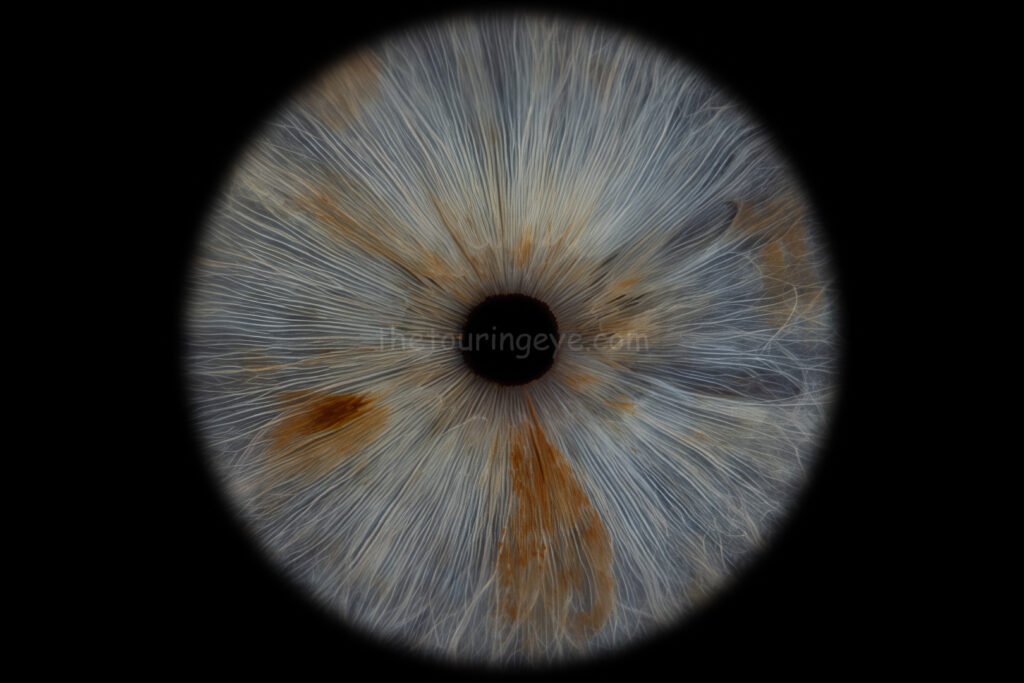
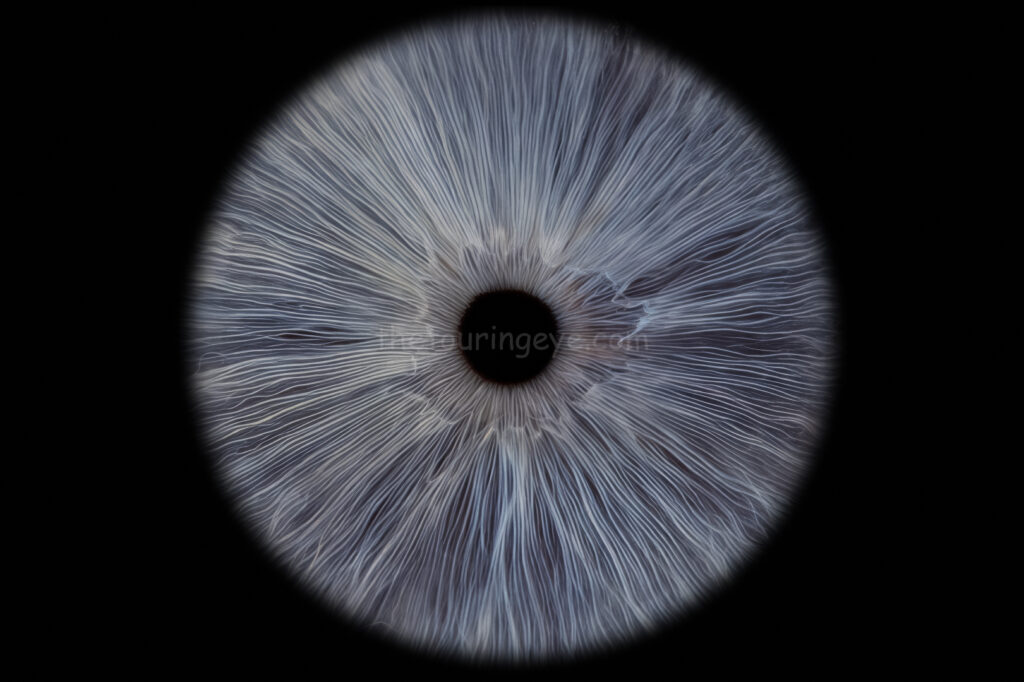
2. Blue Eyes Usually Have Less Melanin
Melanin plays a major role in eye colour. In simple terms, more melanin usually means darker eyes, while less melanin often results in lighter eyes.
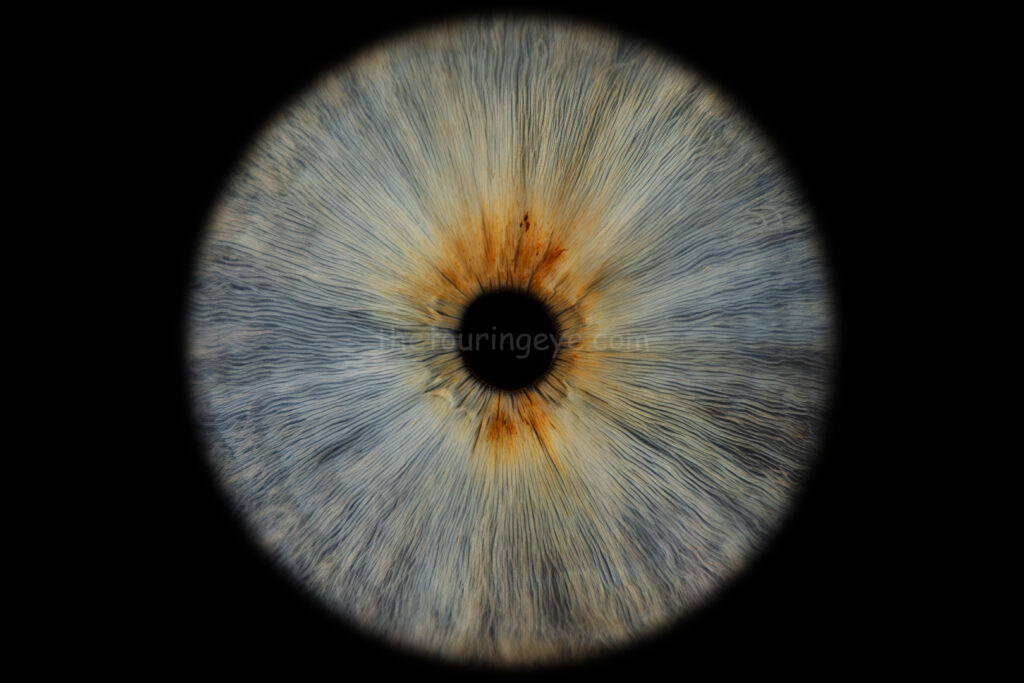
Brown eyes have more melanin in the iris. Blue eyes have much less melanin in the iris stroma, which is the front layer of the iris. Because there is less pigment to absorb and dominate the incoming light, the scattering effect becomes more visible.
This does not mean blue eyes have “no” melanin. That would be a completely different situation and is seen in some pigment-related conditions. Most blue eyes still contain melanin, just in lower amounts and in a different distribution compared with brown eyes.
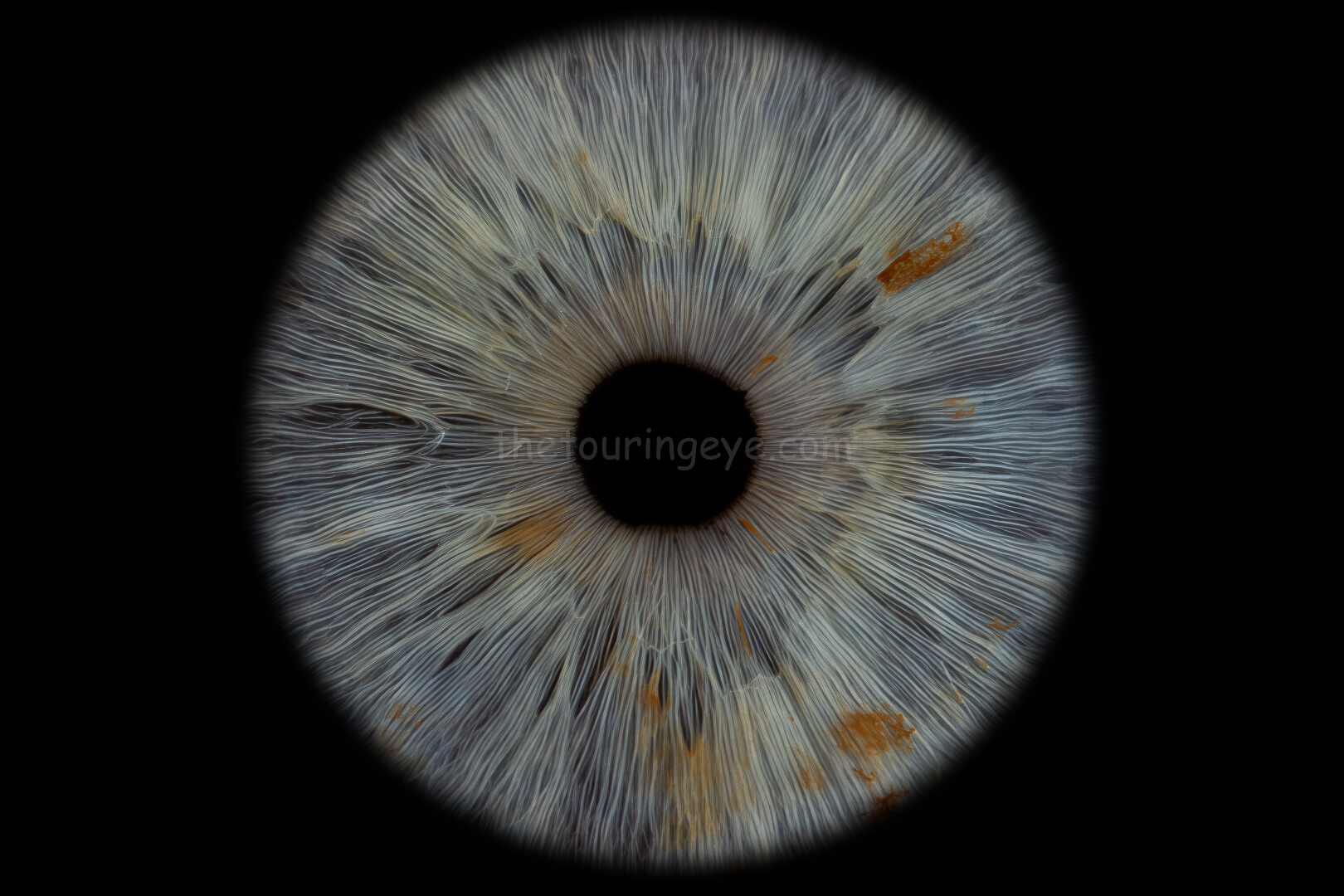
This also explains why blue eyes are not all the same shade. Some are pale, bright and icy. Others look darker, greyish or almost slate blue. The fine structure of the iris, the amount of melanin, and the way light interacts with the tissue all influence the final appearance.
Key takeaway: Blue eyes usually have lower melanin in the iris, which allows light scattering to create the blue appearance.

3. Blue Eye Colour Is Strongly Linked to OCA2 and HERC2 Genes
Eye colour is genetic, but not in the simple school textbook way many of us were taught.
You may have heard that brown eyes are dominant and blue eyes are recessive. That is a useful beginner explanation, but it is too simplistic. Eye colour is influenced by multiple genes, not just one neat little inheritance switch.
Two of the most important genes involved in blue and brown eye colour are called OCA2 and HERC2.
OCA2 is involved in melanin production. HERC2 can influence how OCA2 behaves. A well-studied genetic variation near HERC2 can reduce OCA2 expression, leading to less melanin in the iris and increasing the likelihood of blue eyes.
That is the polite scientific way of saying: one gene can act a bit like a dimmer switch on another gene. Biology, naturally, refused to be simple because it had a reputation to maintain.
Researchers have found that the OCA2-HERC2 region is one of the strongest known genetic influences on blue versus brown eye colour. However, it is not the whole story. Other genes also play a role, which is why eye colour prediction can be accurate in some cases but still not perfect.
Key takeaway: Blue eyes are strongly linked to genetic variation around OCA2 and HERC2, but eye colour is polygenic, meaning several genes are involved.


4. Blue Eyes Are Not as Globally Common as Brown Eyes
Blue eyes are common in some populations, especially in parts of northern and eastern Europe, but globally they are much less common than brown eyes.
Reliable global eye colour statistics are difficult because there is no single worldwide eye colour census. Different sources use different categories, sample groups and methods. Some surveys separate blue, grey, green, hazel and brown; others use broader categories such as light, intermediate and dark.
However, many commonly cited estimates place blue eyes at around 8–10% of the global population. That makes blue eyes far less common worldwide than brown eyes.
In Britain and northern Europe, blue eyes are much more common than the global average. That said, exact UK-wide percentages should be treated carefully unless they come from a properly described dataset. Internet eye-colour statistics have a nasty habit of being copied from one site to another until they start wearing a little fake moustache and pretending to be “research”.
Key takeaway: Blue eyes are relatively uncommon globally, but much more common in some European populations.

5. Many Blue-Eyed People May Share a Common Genetic Origin
One of the most quoted facts about blue eyes is that blue-eyed people may share a common ancestor. There is genuine science behind this, but it needs to be phrased carefully.
A well-known 2008 study suggested that blue eye colour in humans may be linked to a founder mutation affecting the OCA2-HERC2 region. In simple terms, this means a genetic change likely appeared in one ancestral line and was then passed down through many generations.
This does not mean every blue-eyed person is your long-lost cousin in a way that makes family reunions suddenly terrifying. All humans share ancestors if you go back far enough. The interesting part is that a common genetic variation associated with blue eyes appears to have spread widely through human populations.
More recent work also reminds us that eye colour genetics is complex. Not every blue-eyed person will necessarily have the exact same genetic explanation. So the safest version is this:
Many blue-eyed people likely share a common genetic origin for the most common blue-eye-associated variation.
Less catchy, yes. More accurate, also yes. Accuracy is annoyingly like that.
Key takeaway: A major genetic variation associated with blue eyes may trace back to a common ancestral mutation, but eye colour genetics is more complex than one single story.

6. Babies’ Blue Eyes Can Change Colour
Many babies are born with blue or greyish-blue eyes, especially babies with lighter ancestry, but that does not always mean their eyes will stay blue.
A baby’s eye colour can change as melanin develops in the iris after birth. If more melanin is produced, the eyes may gradually become green, hazel or brown. This often happens during the first year of life, although subtle changes can continue beyond that.
This is why a newborn’s eye colour is not always a reliable prediction of their adult eye colour. Parents may proudly announce “blue eyes!” only for biology to quietly change the paperwork a few months later.
In general, gradual eye colour change in babies is normal. However, sudden eye colour changes, changes in only one eye, or changes linked with pain, redness, vision problems or injury should be assessed by an eye care professional.
Key takeaway: Babies’ blue eyes can darken as melanin develops, especially during infancy and early childhood.


7. Blue Eyes May Be More Sensitive to Bright Light
People with blue, grey or other light-coloured eyes may be more sensitive to bright light than people with darker eyes. This is usually explained by lower pigment levels in the iris.
Melanin helps absorb light. Eyes with less melanin may allow more light scatter inside the eye, which can make bright sunlight, reflective surfaces, snow, sea glare or strong flash feel more uncomfortable.
This does not mean everyone with blue eyes has severe light sensitivity. It also does not mean people with brown eyes are immune to glare, sunlight or UV damage. Nobody gets a free pass from the sun, because apparently even the sky has terms and conditions.
The practical advice is simple: protect your eyes outdoors. Good-quality sunglasses that block UVA and UVB light are sensible for everyone, regardless of eye colour. A wide-brimmed hat can also help, especially around water, snow, pale pavements or bright summer conditions.
Key takeaway: Blue eyes may be more prone to light sensitivity, but everyone should protect their eyes from UV exposure.
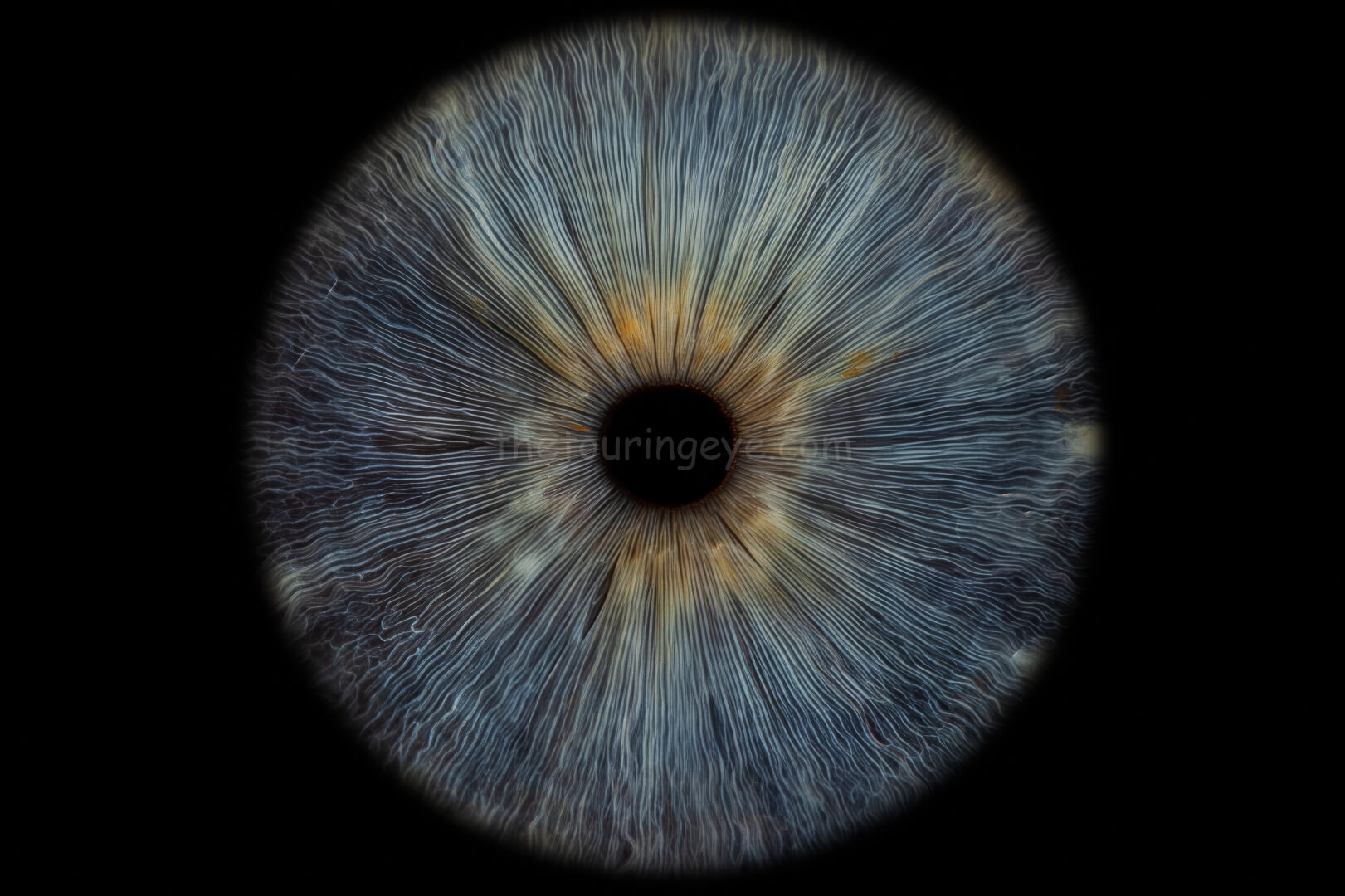
8. Blue Eyes Can Look Different in Photographs
Blue eyes can be surprisingly difficult to photograph accurately. The same iris may look pale blue in one image, grey-blue in another and almost turquoise in a third.
This is not necessarily editing trickery. It can happen because blue eye colour depends heavily on light scattering. The colour you perceive can be influenced by:
- Flash direction
- Ambient light
- Reflections from nearby clothing or surroundings
- White balance in the camera
- The angle of the eye
- The amount of moisture on the eye surface
- The contrast between the pupil, iris fibres and sclera
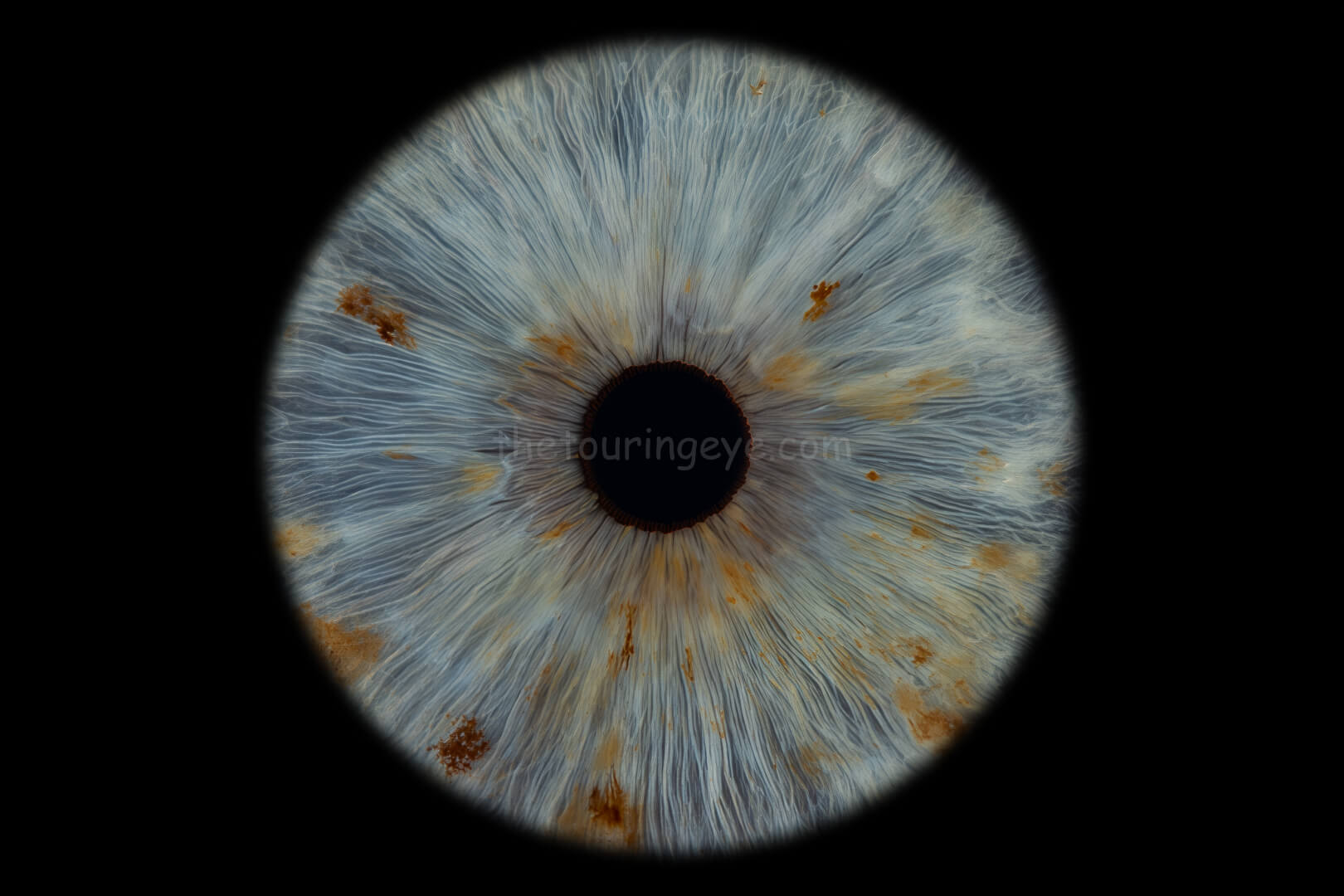
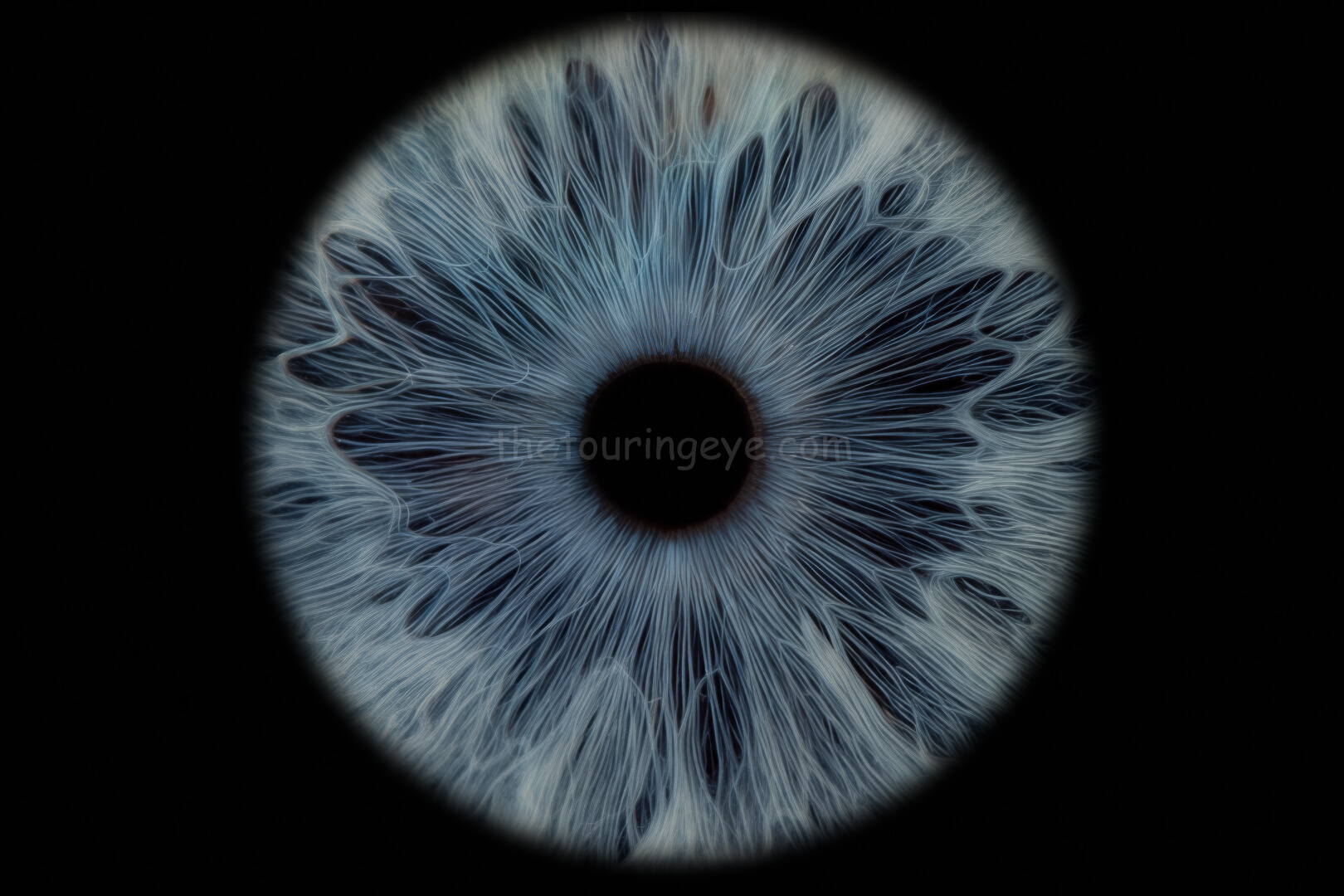
In iris photography, this is especially noticeable because macro lighting reveals detail people do not usually see in the mirror. A client may think, “Hang on, my eye does not normally look like that.” And they may be right — in everyday lighting, it might not. But under controlled lighting, the camera can reveal colours, fibres, rings and structures that are usually hidden.
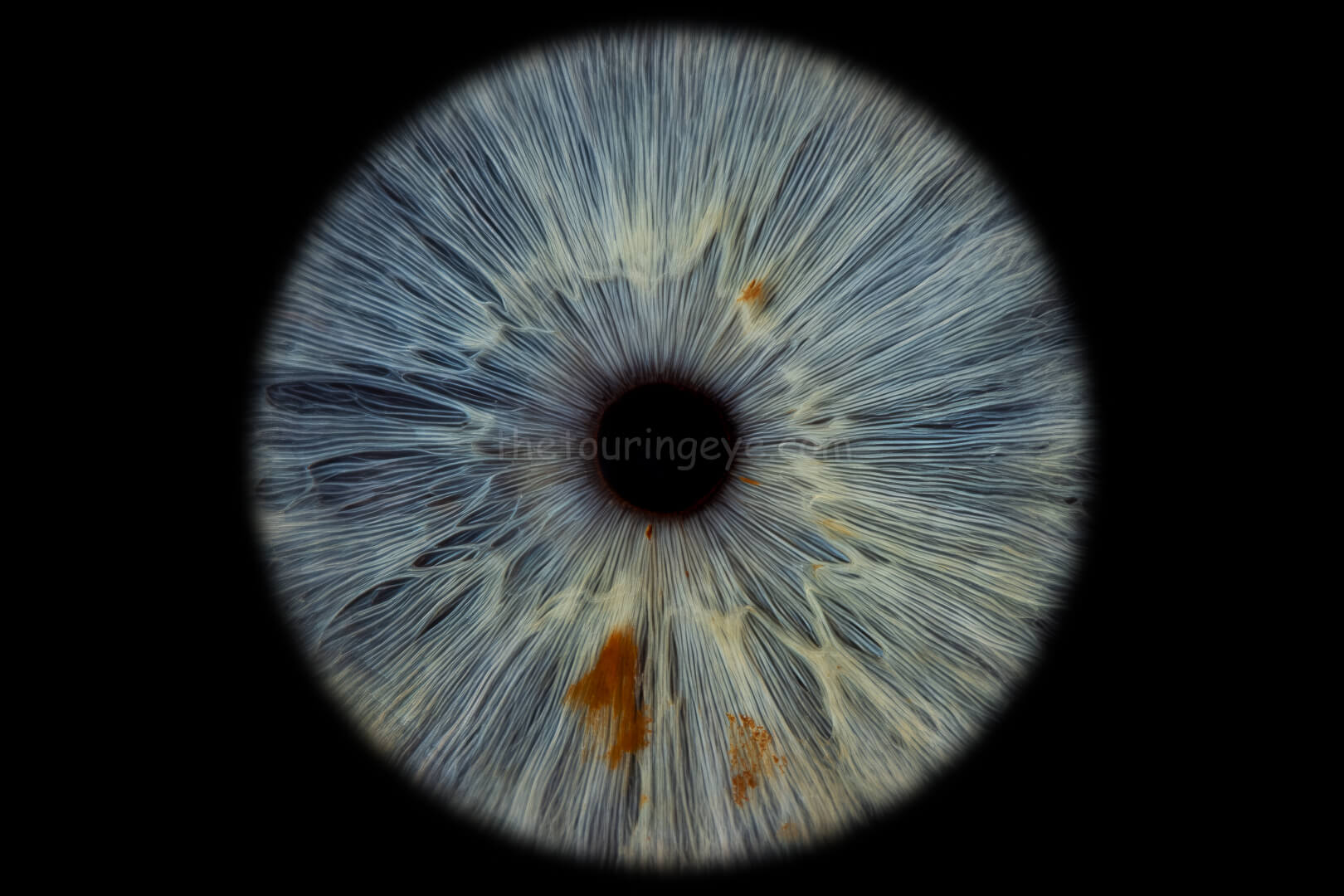
Blue eyes often show intricate radial fibres, darker limbal rings, pale crypts and subtle shifts between blue, grey, white and greenish tones. In other words, the eye may have been showing off all along. It just needed better lighting and a camera rude enough to stare.
Key takeaway: Blue eyes can change appearance in photographs because lighting and camera settings affect how their structure reflects and scatters light.

9. Blue Eyes Are Not Automatically Healthier or Weaker
There are plenty of claims online suggesting blue eyes are either “better” or “worse” than other eye colours. The truth is more sensible and less clickbaity.
Blue eyes are not automatically unhealthy. They are not a defect. They are not a sign of poor vision. They do not mean someone needs glasses. Eye colour alone does not determine whether a person will be short-sighted, long-sighted or have astigmatism.
However, lighter irises have been studied in relation to some eye-health risks, including sensitivity to UV exposure and certain rare eye cancers such as uveal melanoma. The important word here is “risk”, not “destiny”.
Risk factors are not guarantees. Family history, genetics, age, UV exposure, skin type, lifestyle and general health can all matter. Having blue eyes does not mean something bad will happen. It simply means eye protection and regular eye checks are sensible — which, frankly, they are for everyone.
Key takeaway: Blue eyes are normal and healthy, but lighter eye colour may be one factor linked with certain light-related eye risks.


10. Blue Eyes Are Scientifically Fascinating Because They Are Both Genetic and Optical
The best thing about blue eyes is that they are not just a colour. They are a combination of biology, physics and inherited human history.
They involve genetics because eye colour is influenced by inherited variations, especially around the OCA2-HERC2 region. They involve pigment because melanin levels affect how much light is absorbed. They involve optics because scattering inside the iris helps create the visible blue appearance. They involve ancestry because blue eyes are much more common in some populations than others. And they involve photography because lighting can dramatically change how a blue iris appears.
That is quite a lot of drama for something most people simply list on a passport application.
Blue eyes are also a reminder that what we see is not always as simple as it looks. The colour is not a painted surface. It is an interaction between tissue, light and perception. That is why two blue eyes can look completely different, and why the same eye can look different from one room to the next.
Key takeaway: Blue eyes are fascinating because they are created by genetics, melanin, iris structure and light scattering working together.
Frequently Asked Questions About Blue Eyes
Are blue eyes actually blue?
No, not in the sense of containing blue pigment. Blue eyes usually appear blue because they have low melanin in the iris and scatter shorter wavelengths of light.
Are blue eyes rare?
Globally, blue eyes are much less common than brown eyes. Many estimates suggest around 8–10% of the world’s population has blue eyes, although exact figures vary by source and region.
Why do blue eyes look different in different lighting?
Blue eyes rely heavily on light scattering, so their appearance can shift depending on sunlight, flash, indoor lighting, clothing reflections and camera settings.
Can two blue-eyed parents have a brown-eyed child?
It is uncommon, but eye colour genetics is more complex than the old “brown dominant, blue recessive” classroom explanation. Multiple genes influence eye colour, so unusual outcomes can happen.
Do blue eyes mean better eyesight?
No. Eye colour does not determine visual sharpness. A person with blue eyes can have excellent vision, poor vision or anything in between, just like someone with brown, green or hazel eyes.
Are blue eyes more sensitive to sunlight?
They can be. Lighter eyes often have less melanin, which may make bright light and glare more uncomfortable. UV protection is sensible for all eye colours.
Do babies with blue eyes keep them?
Not always. Many babies’ eyes darken as melanin develops after birth, especially during the first year of life.
Why do blue eyes sometimes look grey?
Grey-blue eyes may appear that way because of subtle differences in iris structure, melanin levels, collagen density and lighting. The boundary between blue and grey eye colour can be subjective.
Are blue eyes linked to ancestry?
Yes, partly. Blue eyes are more common in some populations, particularly in northern and eastern Europe, because of inherited genetic patterns. However, blue eyes can appear in people from many backgrounds.
Can eye colour change in adults?
Minor shifts in appearance can happen because of lighting, clothing, pupil size or camera settings. A true sudden colour change, especially in one eye, should be checked by an optometrist or ophthalmologist.
Final Thought
Blue eyes are not just “pretty” or “rare” or “recessive”, although the internet does love a lazy label. They are the result of lower melanin, inherited genetic variation and the physics of light scattering inside the iris.
So the next time someone says blue eyes are blue because they contain blue pigment, you can gently correct them. Or dramatically sigh first. Both are acceptable, depending on the company.
Leave a Reply
You must be logged in to post a comment.